Vw Jetta Check Engine Light: Causes + Fixes

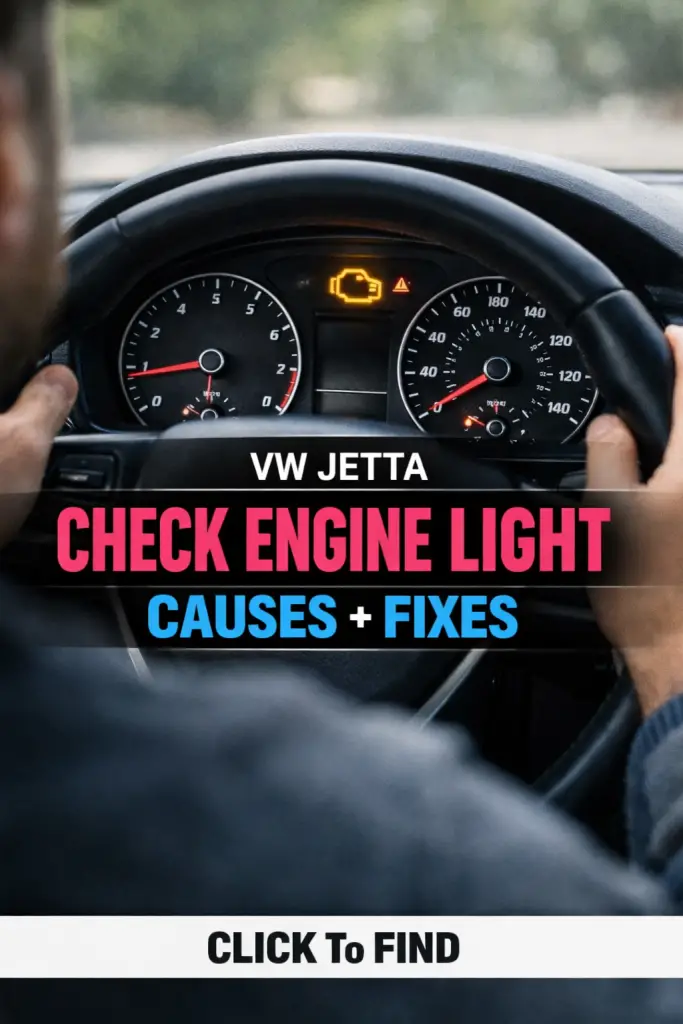
If you’ve ever been cruising in your VW Jetta feeling great… and then bam — the check engine light pops on, I totally get it. Your brain instantly goes to worst-case scenario, like “Is my engine about to explode?” or “How much is this going to cost me?” The truth is, a check engine light can mean anything from a tiny sensor issue to something that actually needs attention ASAP.
I’ve dealt with this more times than I’d like to admit. In my opinion, the VW Jetta is one of those cars that’s fun, solid, and smooth to drive — but when it throws a warning light, it can feel a little dramatic. I think the biggest mistake people make is either ignoring it for weeks or panicking and spending money blindly. I feel like if you understand what triggers that light, it becomes way easier to handle.
So don’t worry — this guide will help you figure out what your Jetta is trying to tell you. I’m going to walk you through the most common causes, how to diagnose it smartly, and how to fix the issue without wasting time or cash.
What the VW Jetta Check Engine Light Really Means
Before we jump into causes and fixes, let’s clear something up.
Your Jetta’s check engine light (CEL) is basically the car’s way of saying:
“Hey… something isn’t right, and I stored a code to tell you what it is.”
That code lives inside your car’s computer system, and once you read it, you stop guessing.
Solid vs Flashing Check Engine Light (Very Important!)
Solid Check Engine Light
- Usually means a non-emergency issue
- Car may drive normally
- You should still check it soon to avoid bigger problems
Flashing Check Engine Light
- More serious warning, often a misfire
- Can damage your catalytic converter quickly
- Best move is to stop driving or drive gently straight to a safe place
If your light is flashing, don’t “test your luck.” Trust me.
Step 1: Don’t Guess — Read the Code First
The fastest way to solve this is reading the diagnostic code using an OBD2 scanner.
What You Need
- A basic OBD2 scanner (cheap ones work fine)
- Or a Bluetooth scanner + phone app
Where the OBD2 Port Is on a Jetta
Usually under the dashboard near the steering column area.
How to Read the Code (Simple Steps)
- Turn the car off
- Plug the OBD2 scanner into the port
- Turn ignition to ON (engine can be off or running depending on scanner)
- Read the stored codes (example: P0301, P0420, etc.)
- Write them down before clearing anything
✅ Pro tip: Don’t clear the code immediately. Clearing it without fixing the cause is like deleting a “low battery” warning and expecting the battery to magically recharge.
Most Common VW Jetta Check Engine Light Causes + Fixes
Here’s the part you came for. These are the issues I’ve seen most often with VW Jettas, especially from everyday driving, heat, stop-and-go traffic, and normal aging.
1) Loose or Bad Gas Cap (Yes, It’s That Common)
This is the classic one. If you recently got gas and the light came on right after, this should be your first check.
Why it triggers the light:
Your fuel system is sealed, and a loose cap can cause an EVAP leak, which the computer detects.
Fix:
- Tighten the gas cap until it clicks 3–4 times
- Drive for 20–50 miles
- If it stays on, replace the gas cap (cheap fix)
✅ Good news: This is one of the easiest fixes and IMO the most satisfying.
2) Bad Spark Plugs or Ignition Coils (Misfires)
If your Jetta feels rough, shakes, loses power, or “stutters,” you might be dealing with a misfire.
Common symptoms:
- Rough idle
- Car hesitates during acceleration
- Poor fuel economy
- Flashing CEL in worse cases
Typical codes:
- P0300 (random misfire)
- P0301–P0304 (misfire in a specific cylinder)
Fix:
- Replace spark plugs if they’re worn
- Replace the ignition coil on the cylinder throwing the code
✅ Best practice:
If one coil fails, the others may not be far behind. But you don’t always need to replace all of them at once.
3) Faulty Oxygen Sensor (O2 Sensor)
Your Jetta has oxygen sensors that monitor exhaust gases and fuel mixture.
When it goes bad, you’ll notice:
- Worse gas mileage
- Sluggish performance
- CEL stays on with no major drive issues
Common codes:
- P0130–P0167 range depending on which sensor
Fix:
- Replace the faulty O2 sensor
- Clear the codes after repair
- Confirm it doesn’t return
✅ Tip: Don’t cheap out too hard here. A super low-quality sensor can cause repeat problems.
4) Catalytic Converter Efficiency Issues
This one freaks people out because catalytic converters aren’t cheap. But don’t jump straight to replacement.
Common code:
- P0420 (catalyst efficiency below threshold)
What causes it?
- A failing catalytic converter
- Bad O2 sensor giving wrong readings
- Exhaust leaks
- Long-term misfires ruining the converter
Fix checklist:
- Fix any misfires first (coils/plugs)
- Check O2 sensors
- Inspect for exhaust leaks
- If the converter is truly bad, replacement may be needed
✅ Real talk:
A converter usually doesn’t “randomly die” — something often kills it over time.
5) EVAP System Leak (Small Leak / Purge Valve Issues)
This is a big one on Jettas. The EVAP system handles fuel vapors.
Symptoms:
- Light comes on randomly
- No big driving changes
- Sometimes rough idle after refueling
Common codes:
- P0440, P0441, P0455, P0456
Fix:
- Check gas cap first
- Inspect EVAP hoses for cracks
- Test/replace purge valve if needed
✅ A small leak code (P0456) can literally be something tiny like a dry cracked hose.
6) MAF Sensor (Mass Air Flow Sensor) Problems
If your air/fuel mix is off, your Jetta may run weird and trigger the CEL.
Symptoms:
- Hesitation
- Rough idle
- Poor acceleration
- Strange shifting on automatic models
Fix options:
- Clean the MAF sensor with proper MAF cleaner
- Replace if cleaning doesn’t work
⚠️ Important: Never spray a MAF with random cleaner. Use MAF-specific cleaner only.
7) Vacuum Leaks (Classic VW Issue)
A vacuum leak can make your engine run lean, causing CEL and drivability issues.
Signs of vacuum leaks:
- Idle surging up and down
- Hissing sound
- Engine running lean codes
Common codes:
- P0171 (system too lean)
Fix:
- Inspect vacuum hoses for cracks
- Look for loose clamps
- Check PCV system hoses
✅ The annoying part? Vacuum leaks can be hard to see until you look closely with a flashlight.
8) PCV Valve Failure
VW engines are known for PCV-related issues in certain years.
Symptoms:
- Rough idle
- Whistling noise
- Lean conditions
- Oil consumption in some cases
Fix:
- Replace PCV valve (or complete PCV assembly depending on engine)
This is one of those repairs that can turn a messy-running Jetta into a smooth one again.
9) Throttle Body Issues (Dirty or Faulty)
Over time, the throttle body can get dirty and cause airflow problems.
Symptoms:
- Jerky acceleration
- Rough idle
- Strange throttle response
Fix:
- Clean throttle body (carefully)
- Some models may need a throttle adaptation reset afterward
✅ If your Jetta feels like it’s “confused” at idle, this might be it.
Quick DIY Troubleshooting Checklist (Before You Spend Money)
Here’s what I recommend doing in this exact order.
Start With the Easy Stuff
- ✅ Tighten/replace gas cap
- ✅ Check if the light is solid or flashing
- ✅ Scan for codes (OBD2 scanner)
If the Car Drives Rough
Focus on:
- Spark plugs
- Ignition coils
- Vacuum leaks
- MAF sensor
If the Car Drives Fine But CEL Stays On
Focus on:
- O2 sensors
- EVAP system leaks
- Catalytic converter efficiency codes
Can You Drive With the Check Engine Light On?
This depends on what’s happening.
You Can Usually Drive If:
- The light is solid
- Car feels normal
- No loud noises or shaking
You Should NOT Keep Driving If:
- The light is flashing
- The engine is misfiring badly
- You smell fuel
- You notice overheating
- The car is losing power fast
If the car shakes like it’s angry with you… don’t keep pushing it.
How to Reset VW Jetta Check Engine Light (After the Fix)
Only reset the light after you fix the issue.
Option 1: Clear Codes With a Scanner (Best Way)
- Plug in OBD2 scanner
- Go to “Clear Codes”
- Confirm
- Drive normally for a few days and monitor
Option 2: Battery Disconnect Method (Not Always Ideal)
Some people disconnect the battery for 10–15 minutes, but I don’t love this approach because:
- It may reset radio settings and other systems
- It doesn’t always clear the underlying stored fault properly
- The light will come back if the issue remains
FYI, scanners are cheap and save you from guessing.
How Much Does It Cost to Fix a Jetta Check Engine Light?
This depends heavily on the cause, but here’s a realistic breakdown:
Lower-cost fixes:
- Gas cap replacement
- Spark plugs
- MAF cleaning
- Small vacuum hose replacement
Mid-range fixes:
- Ignition coil replacement
- O2 sensor replacement
- EVAP purge valve
Higher-cost fixes:
- Catalytic converter replacement
- Major intake leaks
- Engine mechanical issues (rare but possible)
✅ My honest advice: spend money first on diagnosis, not random part swapping.
Common Mistakes People Make (So You Don’t Do Them)
I’ve seen these mistakes over and over:
- Ignoring a flashing CEL (big mistake)
- Clearing the code without reading it
- Replacing parts without confirming the cause
- Assuming it’s always the catalytic converter
- Buying cheap sensors that fail fast
The check engine light isn’t evil — it’s actually helpful when you use it correctly.
When It’s Time to See a Mechanic
If you’re stuck or don’t want to deal with it yourself, no shame in that.
Go to a mechanic when:
- The light keeps coming back immediately
- You have multiple codes at once
- The car is in limp mode
- You suspect timing or internal engine issues
- You fixed the part but symptoms remain
A good shop can run smoke tests for vacuum/EVAP leaks and do advanced diagnostics quickly.
FAQs: VW Jetta Check Engine Light Causes + Fixes
1) Why did my VW Jetta check engine light come on after getting gas?
This usually happens because of a loose gas cap or a small EVAP system leak. Tighten the cap until it clicks and drive for a bit. If the light stays on, scan for EVAP-related codes like P0456.
2) Can I drive my Jetta with the check engine light on?
Yes, if the light is solid and the car drives normally. But if the light is flashing or the car shakes, loses power, or smells like fuel, you should stop driving and diagnose immediately.
3) What is the most common VW Jetta check engine light code?
One of the most common is P0300–P0304, which indicates an engine misfire. Another frequent one is P0456, which points to a small EVAP leak.
4) How do I fix a VW Jetta check engine light for misfire?
Start by scanning the code to identify the cylinder. Replace the spark plug and check the ignition coil for that cylinder. Misfires should be fixed quickly to avoid damaging the catalytic converter.
5) Why does my check engine light keep coming back after I cleared it?
Because the root issue wasn’t fixed. Clearing the code just resets the warning temporarily. If the problem remains—like a bad sensor, vacuum leak, or misfire—the car will detect it again and turn the light back on.

![Check Engine Code 6480 Volkswagen [Find Out]](https://volkswagenbuddy.com/wp-content/uploads/2024/05/check-engine-code-6480-volkswagen-find-out_4246-768x531.jpg)

![2002 Volkswagen Jetta 2.0 Engine Code 17704 [Discovered]](https://volkswagenbuddy.com/wp-content/uploads/2024/05/2002-volkswagen-jetta-2-0-engine-code-17704-discovered_4204-768x531.jpg)
![2014 Volkswagen Jetta Se Engine Code [Disclosed]](https://volkswagenbuddy.com/wp-content/uploads/2024/05/2014-volkswagen-jetta-se-engine-code-disclosed_4237-768x531.jpg)