
Car Seat Cover Design Ideas for Stylish, Durable, and Easy-to-Clean Interiors


You’ll explore ways to protect and refresh a vehicle’s interior while matching personal taste and needs. This article helps you weigh style, comfort, durability, and sustainability so you can choose covers that suit daily use or special upgrades.
Expect clear options—from luxury leather and embroidered custom pieces to breathable mesh, waterproof quilted DIYs, and eco-friendly bamboo fiber choices—so you can pick what fits your life and budget.
1) Luxury leather seat covers with custom embroidery

They add a refined look and protect the original upholstery. Leather or leatherette choices suit different budgets and cleaning needs.
Custom embroidery lets owners add initials, logos, or simple patterns for a personal touch. It keeps lines clean and can be matched to stitching or trim for a cohesive interior.
2) Breathable mesh fabric covers for all-season comfort
They use mesh to boost airflow and cut heat buildup. This keeps seats cooler in summer and reduces sweating on long drives.
Mesh often adds light padding for extra comfort without trapping moisture. It fits many car types and installs quickly for easy upgrades.
3) Quilted waterproof DIY washable car seat covers
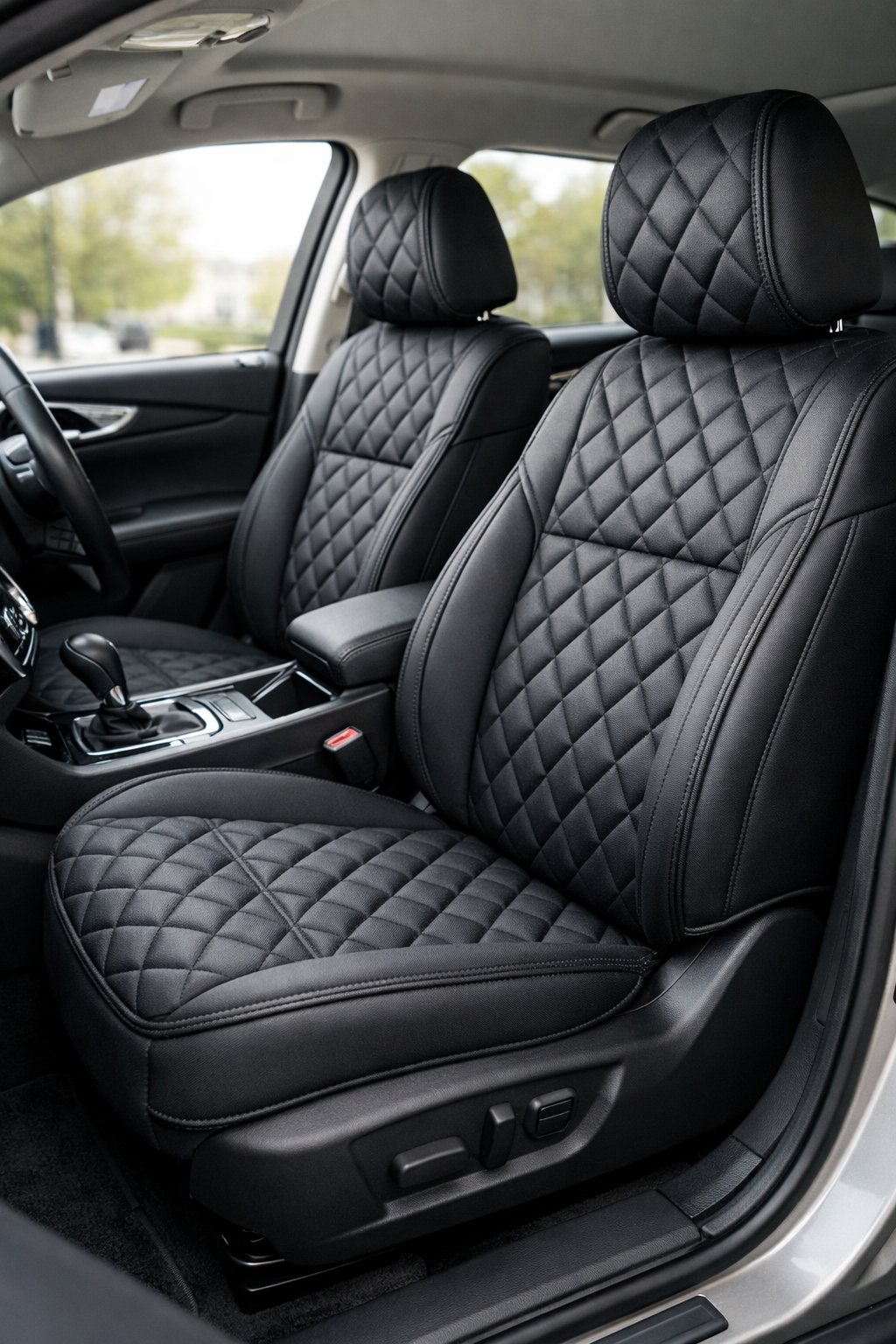
They use quilted, waterproof fabric to protect seats from spills and wear.
The quilting adds padding and a neat, tailored look without much bulk.
They are machine washable and easy to remove for cleaning.
Simple patterns with elastic or ties make them quick to fit and reuse.
4) Eco-friendly bamboo fiber seat covers
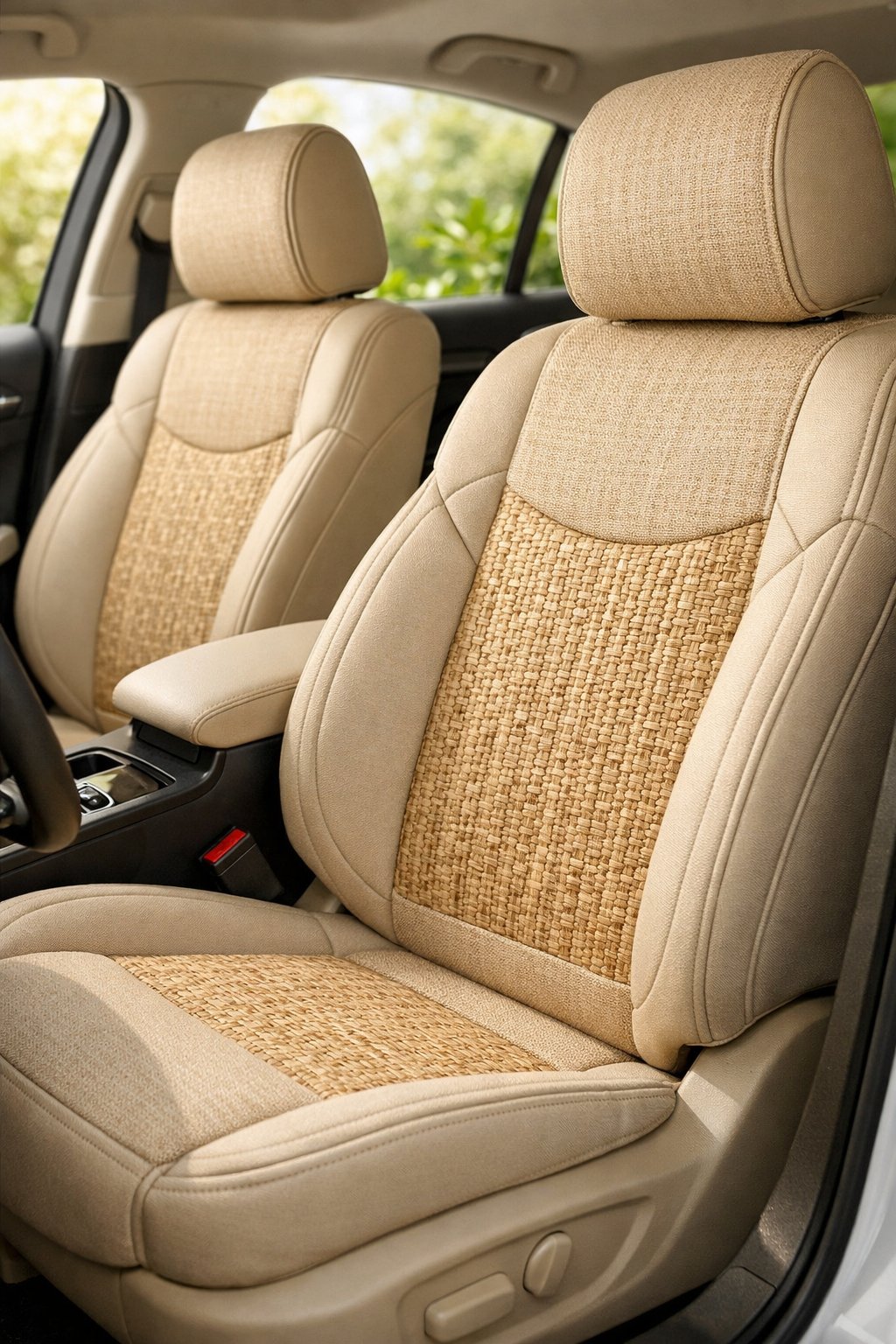
They use bamboo fiber for a soft, breathable surface that helps keep seats cooler.
They often come from sustainable sources and lower environmental impact compared with many synthetics.
They resist odors and wick moisture, making them practical for daily use.
They fit many car seats and usually clean easily with mild soap and air drying.
5) Boho print fabric covers for personalized style
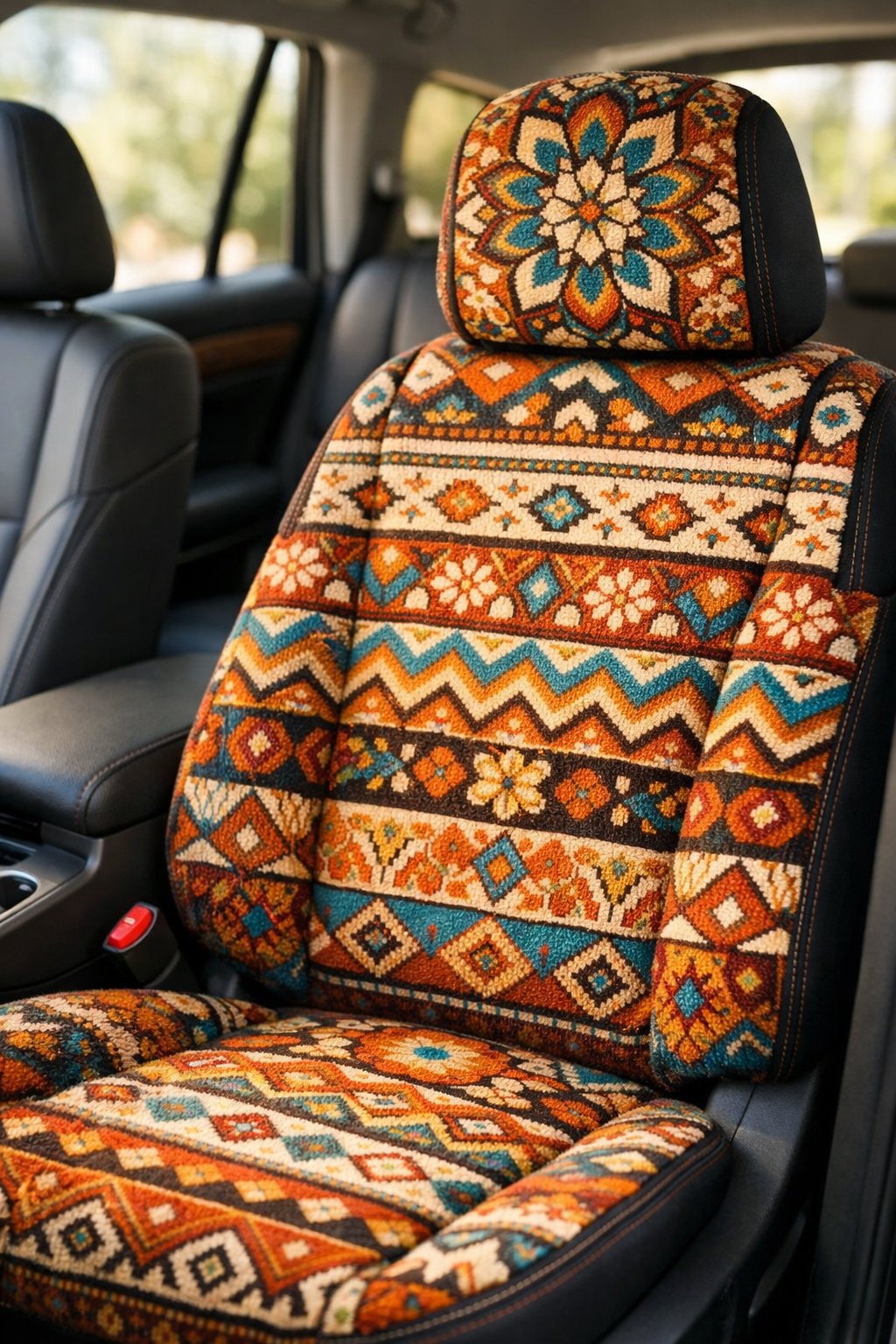
They add color and pattern without altering the car. Boho prints often mix stripes, florals, and geometric motifs for a layered look.
They come in breathable fabrics that resist fading and wear. Drivers can choose ready-made or custom designs to match personal taste.
Key Principles of Car Seat Cover Design

Good seat cover design balances long-term wear, daily comfort, and visual fit with the vehicle’s interior. Practical choices about fabric, padding, and color determine how well covers protect seats, feel on long drives, and match other trim.
Material Selection and Durability
They should choose materials that resist stains, UV fading, and abrasion. Common options include synthetic leather (easy to wipe, durable), neoprene (waterproof, good for pet owners), and heavy-duty polyester blends (breathable and affordable). Each material has different abrasion ratings and care needs; synthetic leather needs gentle cleaners, while neoprene tolerates more water and rough use.
Construction matters as much as fabric. Reinforced seams, double stitching at high-stress points, and backing that resists slipping extend life. Compatibility with seat features—side airbags, seat heaters, and anchor points—must be verified before purchase or custom sewing.
Comfort and Ergonomics
They should prioritize padding thickness and contouring for long trips. Memory foam or multi-density foam inserts offer pressure relief and support for the lower back and thighs. Thin, poorly shaped covers can amplify discomfort and reduce the original seat’s lumbar support.
Breathability affects temperature control. Perforated fabrics, mesh panels, or moisture-wicking liners prevent sweat buildup. For vehicles in cold climates, choose covers compatible with seat heaters so heat transfers through the material. Fit also influences ergonomics: a snug, custom-fit cover keeps padding where intended, while loose covers shift and create pressure points.
Color Coordination and Aesthetics
They should match cover color and texture to the vehicle’s existing palette—dash, door panels, and carpet. Neutral tones like black, gray, and tan blend with most interiors. Two-tone schemes or contrast stitching can highlight design lines and reinforce a sport or luxury look.
Finish and pattern matter for perception. Matte or textured fabrics hide wear better; glossy synthetic leather reads as premium but shows scratches. Small, repeated patterns work in compact cabins, while large, bold prints suit roomy or personalized vehicles. For resale value, conservative choices appeal to future buyers; for personalization, accents like piping or embroidered logos add character without overpowering the cabin.
Customizing Your Car Seat Covers
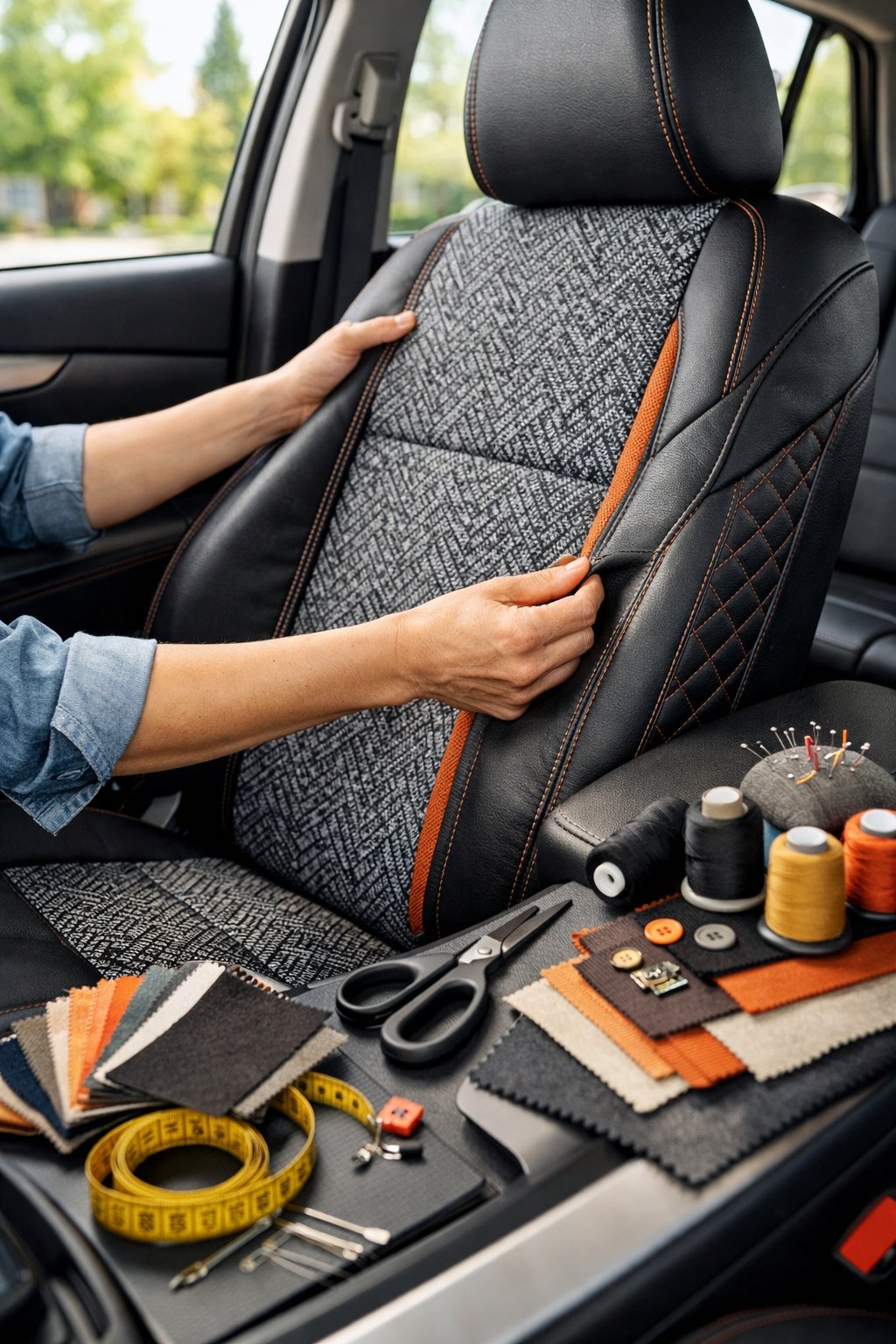
This section shows practical steps to design, fit, and personalize seat covers for comfort, durability, and style. It covers tools, materials, and specific options that change appearance and function.
DIY Design Tips
They should measure each seat precisely before buying materials. Use a tape measure to record width, height, and depth at three points: top, middle, and bottom. Note headrest and armrest shapes too.
They should pick materials by use: waterproof neoprene for pets, breathable polyester for daily driving, and faux leather for a dressier look. Check stitch strength and backing material so covers stay put.
They should download or print simple templates from the vehicle’s make and model to trace patterns. Use clips or temporary stitches to test fit. Sew with a heavy-duty needle and polyester thread for strength.
They should install seat anchors, Velcro straps, and elastic hems to prevent slipping. Test buckles and airbags for proper clearance. Make small adjustments rather than big cuts; trimming can always come later.
Personalization Options for Unique Styles
They can add embroidered initials or logos on headrests or seatbacks for a custom touch. Choose contrasting thread colors and limit designs to one or two areas to keep the look balanced.
They can mix panels of materials—faux leather sides with fabric centers—to combine comfort and durability. Use color blocking with two complementary shades to highlight contours.
They can use printed sublimation for full-seat graphics, such as patterns, maps, or team emblems. Confirm the print method resists UV and repeated washing.
They can add functional details: built-in phone pockets, lumbar pads, or heated-seat wiring access. Prioritize features that match daily needs and check that any added hardware does not interfere with safety systems.


![2001 Jetta Volkswagen Air Conditioner Not Working [Causes & Proven Solutions]](https://volkswagenbuddy.com/wp-content/uploads/2024/05/2001-jetta-volkswagen-air-conditioner-not-working-causes-proven-solutions_3934-768x531.jpg.webp)
![How Do I Reset My Volkswagen Radio Code: [Answered]](https://volkswagenbuddy.com/wp-content/uploads/2024/02/how-do-i-reset-my-volkswagen-radio-code-answered_1927-768x531.jpg.webp)
![How Many Car Brands Does Volkswagen Own: [Find Out]](https://volkswagenbuddy.com/wp-content/uploads/2024/02/how-many-car-brands-does-volkswagen-own-find-out_1909-768x531.jpg.webp)

![Are Volkswagen Tiguan All Wheel Drive: [Answered]](https://volkswagenbuddy.com/wp-content/uploads/2024/02/are-volkswagen-tiguan-all-wheel-drive-answered_731-768x531.jpg.webp)